1917–1918 Dodge Brothers Military Touring Car: 212-Cubic-Inch L-Head Four
Dodge Brothers military touring cars of 1917 and 1918 used the firm's 212.3-cubic-inch side-valve four-cylinder engine, commonly rated at 35 horsepower, with a three-speed sliding-gear transmission and rear-wheel drive. They were open touring automobiles adapted for staff, liaison, reconnaissance, and command work rather than a wholly separate combat vehicle designed on a unique military chassis.
These cars belonged to the Model 30-35 line, a retrospective designation widely applied to the sturdy four-cylinder Dodge automobiles introduced for the 1915 model year. Their conventional gearbox, substantial frame, 12-volt electrical equipment, all-steel body construction, and reputation established during the 1916 Mexican Punitive Expedition made the Dodge a practical alternative to lighter Ford Model T military cars.
Best known for carrying officers and dispatch personnel over primitive roads in Mexico, the United States, and wartime France, the Dodge Brothers staff car helped demonstrate that a mass-produced American touring car could perform military transport duties without requiring an exotic chassis.
Collectors still value surviving examples because an authentic military Dodge combines early all-steel automobile construction with documented service from the period when cavalry logistics began yielding to motor transport. The central challenge is provenance: many civilian touring cars have since received olive-drab paint, while genuine military vehicles often lost their original bodies, data plates, equipment, or engines through decades of hard use.
Quick Facts
The essential specifications describe a production touring car selected and equipped for military work. No universally applied military model code comparable to the standardized designations of later Dodge WC vehicles is documented for these World War I cars.
| Category | Specification |
|---|---|
| Production years covered | 1917–1918 |
| Manufacturer | Dodge Brothers, Detroit, Michigan |
| Model family | Dodge Brothers four-cylinder touring car, commonly grouped as Model 30-35 |
| Generation or chassis code | No separate military generation code consistently documented |
| Principal body style | Open five-passenger touring body configured for staff and liaison duties |
| Engine | Water-cooled L-head inline-four |
| Displacement | 212.3 cubic inches, approximately 3.48 liters |
| Drivetrain layout | Front engine, rear-wheel drive |
| Transmission | Three-speed selective sliding-gear manual |
| Primary market | United States military procurement and wartime service |
| Collector significance | Early standardized military motor transport based on a mass-produced American automobile |
The term “staff car” describes the vehicle's duty more accurately than a distinct factory trim. Procurement specifications, locally installed equipment, body replacements, and unit-level modifications could produce visible differences between cars that began with substantially similar Dodge touring-car mechanicals.
Why It Matters
The Dodge Brothers touring car reached military service before the United States entered World War I. In 1916, General John J. Pershing's expedition into Mexico used Dodge touring cars alongside motorcycles, trucks, and other automobiles while pursuing forces associated with Pancho Villa. Lieutenant George S. Patton also employed Dodge cars during his well-documented May 1916 raid at San Miguelito, an episode that gave the marque unusually conspicuous exposure during the Army's early experiments with mobile operations.
The lesson was practical rather than theatrical. A reasonably powerful stock automobile could carry officers and messages much faster than horse transport, while its conventional three-speed transmission gave drivers more control over difficult gradients than the Ford Model T's planetary transmission. Dodge's pressed-steel frame, robust rear axle, electric starting, and steel body also suited repeated use by drivers who did not treat the car as private property.
World War I expanded the need for staff movement, courier work, communications, and inspection transport. The Dodge touring car was not an armored scout and was not intended to cross shell craters like a tracked vehicle. It was a road and light cross-country machine whose value lay in dependable mobility between headquarters, depots, railheads, camps, and operational units.
Historical Context and Development
Dodge Brothers before American entry into World War I
John and Horace Dodge had built engines, transmissions, and other assemblies for manufacturers including Ford before launching a complete Dodge Brothers automobile in late 1914. The new car was engineered as a substantial middle-priced product rather than the cheapest possible means of transport. Its 35-horsepower four, 12-volt electrical system, conventional transmission, and all-steel body distinguished it from the ubiquitous Model T.
The steel touring body was especially relevant to fleet service. Dodge Brothers was an early high-volume user of all-steel body construction developed with the Edward G. Budd Manufacturing Company. Steel did not make the body immune to fatigue or corrosion, but it reduced dependence on the extensive structural timber found in many contemporary bodies and offered repeatability valuable to large-scale production.
Military priorities and procurement
Military buyers needed vehicles already in production, repairable with available parts, and capable of carrying personnel over roads that ranged from paved urban streets to rutted tracks. The Dodge was purchased within that environment. It did not arise from a homologation rule, racing program, or secret factory project, and there is no reliable basis for assigning it a later-style Dodge military chassis code.
Ford Model T cars and light derivatives remained obvious competitors because they were light, inexpensive, simple, and produced in enormous numbers. Larger Packard, Cadillac, Pierce-Arrow, and White vehicles could serve senior officers or heavier roles, but they imposed greater cost and fuel demand. The Dodge supplied useful power and conventional controls in a compact touring-car package.
Form shaped by civilian production
The military car retained the upright radiator, separate front fenders, running boards, tall windshield, and open touring body familiar from civilian Dodges. A folding fabric top provided weather protection, while side curtains could enclose part of the passenger compartment. The short hood and upright body created generous passenger volume relative to the car's footprint, though there was little protection from mud, dust, rain, or hostile fire.
Olive-drab finishes, military markings, tool stowage, spare-wheel arrangements, and lighting details depended on contract, date, and service history. Restored vehicles should not be treated as though every World War I Dodge left Detroit in one universal staff-car specification.
Engine and Drivetrain
The 212.3-cubic-inch Dodge four
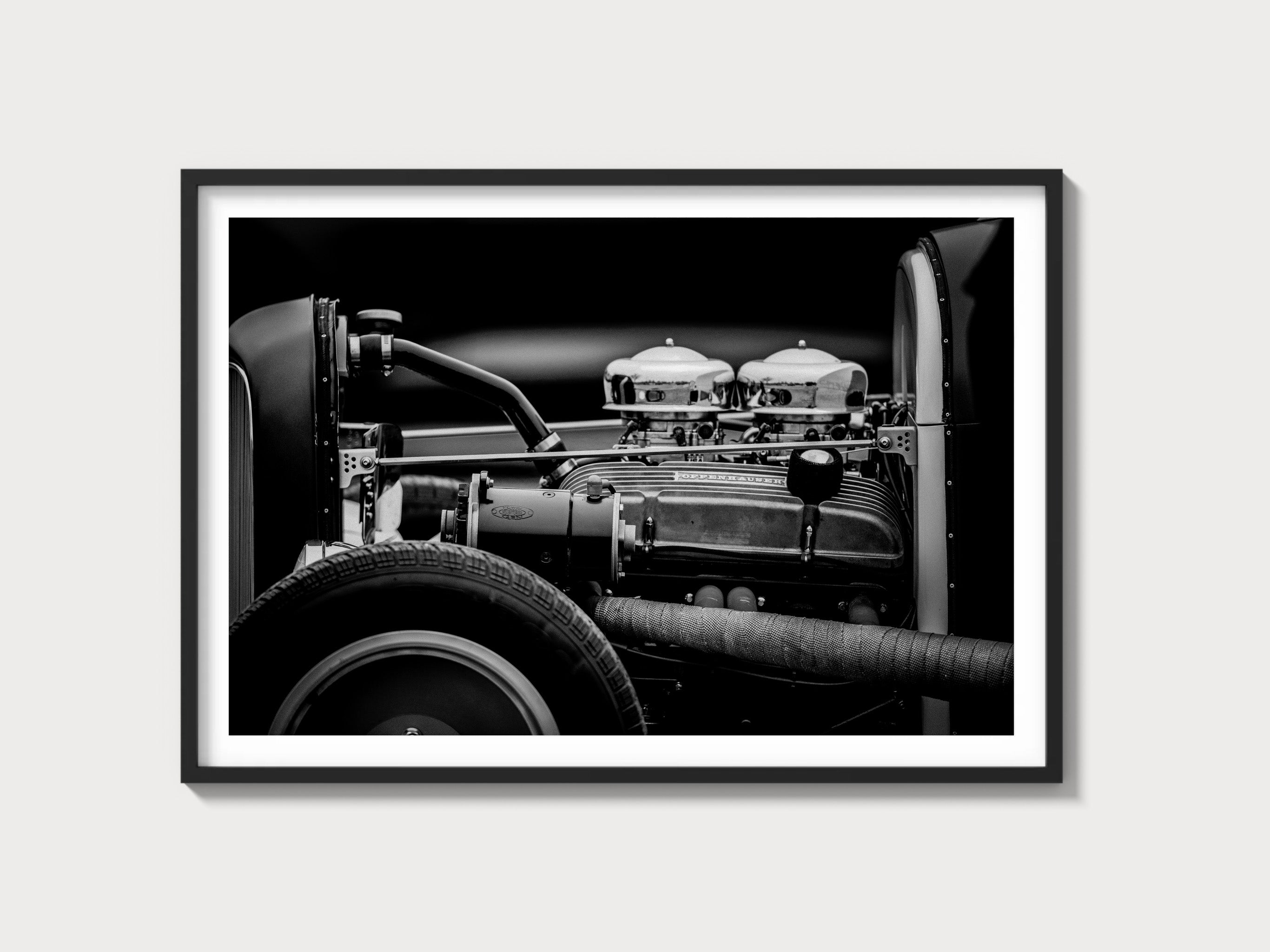
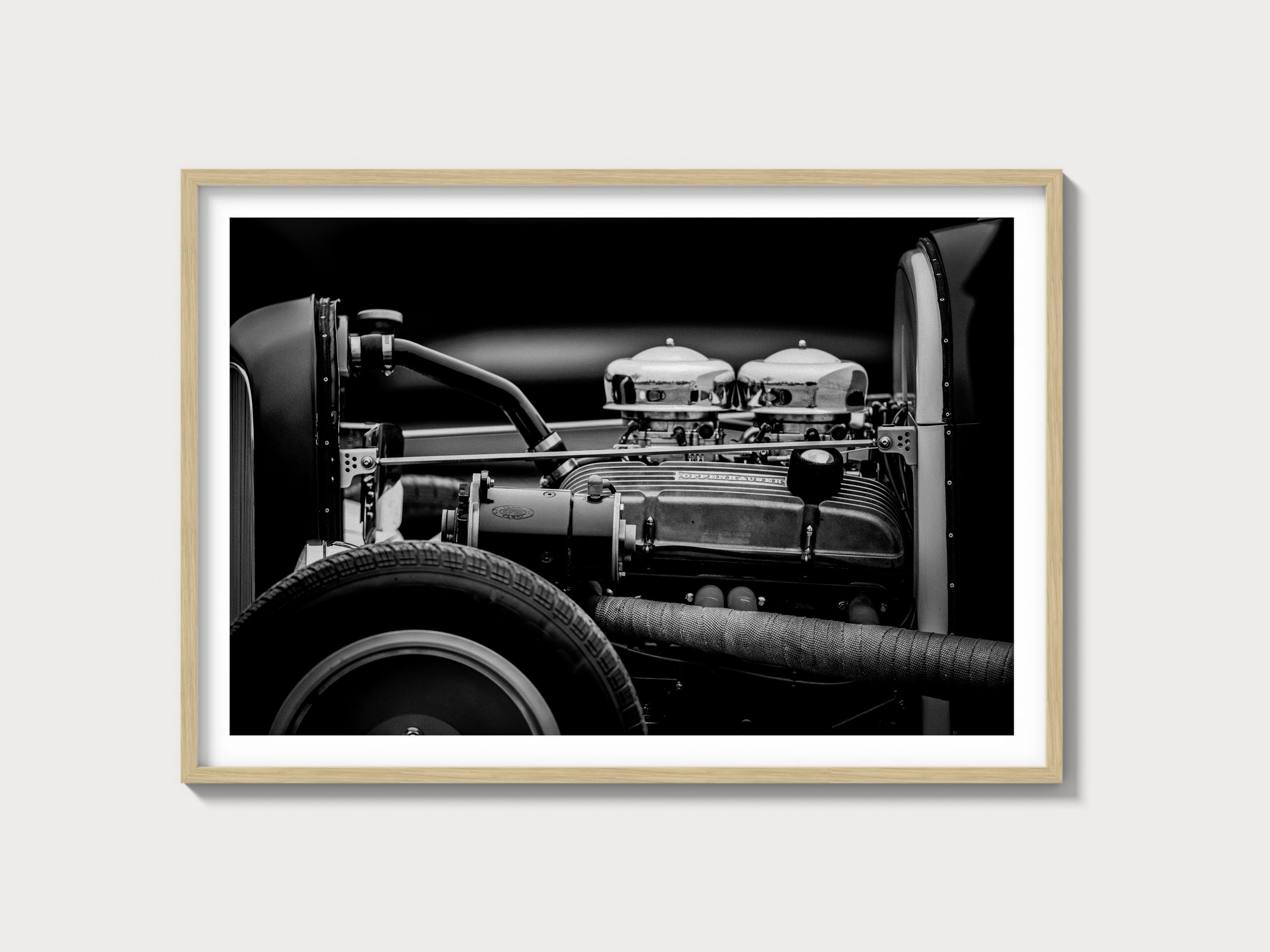
The engine was a long-stroke inline-four with its valves located in the cylinder block, the side-valve or L-head layout that dominated American volume production before overhead-valve designs became common. A 3.875-inch bore and 4.5-inch stroke yield 212.3 cubic inches. Factory and contemporary descriptions commonly give 35 horsepower, although period horsepower conventions do not correspond neatly to modern certified net ratings.
A single carburetor supplied the mixture, and a mechanically driven fan and liquid-cooling system controlled temperature. Battery ignition and the Dodge 12-volt electrical system eased starting compared with cars dependent entirely on hand cranking or magneto ignition. The hand crank remained essential backup equipment in military use.
Lubrication practice reflects the period. Internal oil distribution, splash action, frequent level checks, and regular attention mattered far more than long modern service intervals. Rebuilders must inspect oil passages, bearing clearances, crankshaft condition, cylinder taper, valve seats, and the integrity of old castings rather than assuming that low engine speed guarantees low wear.
Transmission and final drive
The three-speed selective sliding-gear transmission required deliberate shifts and competent double-declutching when changing down. Power passed through a manually operated clutch, a propeller shaft, and a geared rear axle. There was no synchromesh, no overdrive, and no low-range transfer case.
The following table confines itself to specifications consistently associated with the four-cylinder Dodge touring-car platform. Torque, compression ratio, and governed engine speed are omitted because dependable figures are not consistently presented in surviving general references.
| Item | Specification |
|---|---|
| Engine configuration | Longitudinal L-head inline-four |
| Displacement | 212.3 cu in, approximately 3,478 cc |
| Bore and stroke | 3.875 x 4.5 in |
| Factory-rated output | 35 hp, commonly listed in period specifications |
| Induction | Single carburetor |
| Fuel | Gasoline |
| Ignition | Battery ignition |
| Cooling | Liquid cooling with radiator and engine-driven fan |
| Transmission | Three-speed selective sliding-gear manual with reverse |
| Final drive | Propeller shaft to rear axle |
The large displacement and long stroke produced useful low-speed pull rather than high engine speed. That mattered when a loaded car had to start on an incline, work through deep mud, or maintain momentum on a rough road without excessive clutch slipping.
Chassis, Suspension, and Braking
The Dodge combined a separate pressed-steel frame with a steel touring body. Beam axles and semi-elliptic leaf springs provided the durability and wheel movement expected of the period, while wooden artillery wheels with demountable rims tolerated rough use and allowed tire service without replacing an entire wheel assembly.
Steering was entirely manual and relatively low geared. Mechanical braking acted at the rear wheels, as was normal for an American passenger car of this age. A driver therefore depended on anticipation, engine braking, correct adjustment, and good tire adhesion rather than four-wheel braking or hydraulic assistance.
This table identifies the chassis features most relevant when assessing completeness or planning a restoration.
| Component | Period Configuration |
|---|---|
| Frame | Separate pressed-steel frame |
| Body construction | Steel open touring body mounted to the frame |
| Wheelbase | 110 in |
| Front suspension | Beam axle with semi-elliptic leaf springs |
| Rear suspension | Live axle with semi-elliptic leaf springs |
| Steering | Manual steering |
| Service brakes | Mechanically operated rear-wheel brakes |
| Wheels | Wooden artillery type with demountable rims |
| Electrical system | 12 volt |
The high center of gravity, narrow tires, flexible leaf springs, and limited brakes set strict boundaries. On poor surfaces, however, the long wheel travel and modest speed allowed the chassis to absorb conditions that would punish a more rigid, low-slung automobile.
Driving Experience and Handling Dynamics
Starting demands more ritual than a modern driver expects. Fuel supply, ignition setting, mixture, oil level, and coolant all warrant attention before the starter is engaged. Once warm and correctly tuned, the large four should pull cleanly from low speed, with widely spaced combustion pulses and considerable mechanical sound.
The throttle response is measured rather than sharp. The car works best when the driver preserves momentum and uses the engine's displacement instead of chasing revs. First gear is for moving away or negotiating a severe obstruction, while the upper ratios suit the steady road speeds for which the chassis was designed.
At parking speed the steering is heavy, especially on soft ground, but effort decreases once the narrow front tires begin rolling. Steering response is slow by later standards, and corrections travel through a tall wheel with substantial rim movement. Wear in the steering box, kingpins, spring shackles, and wheel bearings can turn normal period looseness into unsafe wander.
The leaf-sprung body rolls and pitches visibly. It does not reward abrupt direction changes, but its axle articulation and compliant springs suit rutted surfaces. Properly rebuilt dampers, correctly inflated tires, sound wheel spokes, and tight spring mountings make a larger difference than owners accustomed to later cars may anticipate.
Braking defines the safe pace. Rear-only mechanical brakes provide modest retardation and can lock a rear wheel on loose ground if adjustment differs from side to side. A knowledgeable driver leaves a large margin, changes down early, and avoids relying on one hard application.
Identification and Originality
Serial numbers and military provenance
A 1917 or 1918 Dodge does not possess a modern 17-character VIN. Identification relies on period serial and engine numbers, surviving tags, frame evidence, body construction, and documentary history. Number locations and sequences should be checked against marque-club records and surviving factory references before purchase, particularly where corrosion, frame repairs, or replacement engines have obscured stampings.
Engine and chassis numbers should be recorded exactly, including their typeface and the surface on which each appears. “Matching numbers” is a less straightforward concept here than on a postwar performance car because military maintenance could involve powertrain replacement, and surviving factory records do not always permit a definitive engine-to-chassis pairing. An old replacement is not proof of fraud, but it affects how the car should be described.
Military provenance requires more than olive-drab paint. Useful evidence includes period registration or property tags, unit photographs showing the vehicle, wartime correspondence, government disposal documents, early ownership records, and old paint layers in protected areas. Freshly stamped plates, unsupported unit markings, and a restoration story assembled from recent parts deserve close scrutiny.
Body, fittings, and finishes
The correct body should display period Dodge touring-car proportions and construction rather than a later body shortened or adapted to fit. Windshield posts, top irons, seat frames, running boards, fenders, splash aprons, hood panels, radiator fittings, lamps, wheel hardware, and controls all provide useful dating evidence. Because civilian and military cars shared major components, correct Dodge parts do not by themselves prove government service.
Surviving examples often contain later carburetors, generators, distributors, wheels, rims, lamps, or replacement dashboard instruments. Such changes may have kept the car operational for decades, but they should be disclosed. A reproduction top or wiring loom is generally preferable to an unsafe original item, provided its materials, stitching, fasteners, routing, and appearance follow period practice.
No single modern olive-drab paint code can authenticate every World War I Dodge. Paint formulation, application, exposure, depot refinishing, and unit maintenance all introduced variation. Protected original samples should guide color matching, and restorers should preserve evidence before stripping the body or frame.
Variant and Body Breakdown
Military procurement did not create a broad factory trim hierarchy for the touring car. The table separates the staff-car configuration from closely related Dodge forms that are sometimes confused with it in collections and sale descriptions.
| Variant / Code | Years | Engine / Output | Market | Key Difference |
|---|---|---|---|---|
| Military Touring Car / Staff Car, no consistent separate factory code documented | 1917–1918 | 212.3-cu-in L-head four / 35 hp commonly listed | Military | Open touring body equipped and marked for staff, command, liaison, or courier work |
| Civilian Touring Car, Model 30-35 family | 1917–1918 model years represented | 212.3-cu-in L-head four / 35 hp commonly listed | Civilian | Shared core chassis and body architecture, without demonstrated military issue or equipment |
| Military ambulance or light commercial derivative | World War I period | Dodge four-cylinder powertrain, specification dependent on chassis and build date | Military and government service | Purpose-built or converted utility body rather than an open staff-car body |
Exact production totals for the military touring-car configuration are not consistently separated from Dodge automobiles and light commercial vehicles supplied for government use. Consequently, broad wartime Dodge procurement totals should not be presented as staff-car production numbers.
Performance and Dimensional Specifications
Standardized acceleration tests were not normally published for military touring cars of this period, and payload, tires, gearing, body equipment, road quality, and engine condition could substantially change results. The dependable reference points are therefore limited to the chassis dimensions and factory-listed engine output.
| Measurement | Figure | Basis |
|---|---|---|
| Wheelbase | 110 in | Dodge Brothers four-cylinder chassis specification |
| Engine displacement | 212.3 cu in | Calculated from documented 3.875-in bore and 4.5-in stroke |
| Rated output | 35 hp | Commonly listed period factory rating |
| Forward ratios | Three | Factory transmission configuration |
Reliable, configuration-specific figures for curb weight, top speed, 0–60 mph acceleration, and quarter-mile performance are not consistently documented for military-equipped cars. Quoting a civilian catalog weight or a speed achieved by a restored example would suggest precision that the historical record does not support.
Compared With Related Models
Civilian Dodge Brothers Touring Car
Mechanically, the civilian 1917 or 1918 touring car is the closest comparison because it supplied the basic engine, transmission, frame, axles, body form, and electrical system. The principal differences concern finish, equipment, markings, procurement history, and service use. A military-themed restoration built from a civilian Dodge can be historically representative, but it should not be advertised as an issued staff car without evidence.
Ford Model T military cars
The Model T was lighter and vastly more numerous. Its two-speed planetary transmission, transverse springs, and exceptionally simple controls differed sharply from the Dodge's three-speed sliding-gear box and semi-elliptic spring arrangement. Ford's advantages included parts availability and low weight, while the Dodge offered a larger engine, conventional shift pattern, 12-volt starting equipment, and a more substantial touring body.
Later Dodge military vehicles
The 1917–1918 car should not be confused with Dodge's purpose-developed World War II military trucks, particularly the half-ton VC series and the later WC family. Those vehicles used military type designations, heavier truck frames, four-wheel drive in many forms, and bodies engineered around specific tactical roles. Applying “WC” terminology to a World War I Dodge touring car is historically incorrect.
Later 1920s Dodge Brothers cars also evolved in detail, and four-wheel braking eventually replaced the rear-wheel-only arrangement. A later chassis or drivetrain can improve usability, but it materially changes the identity of a restoration presented as a 1917 or 1918 military car.
Ownership and Restoration Notes
Mechanical work
The engine is mechanically understandable but not casual rebuild material. Crankshaft condition, poured bearing work where applicable, piston and ring availability, valve-seat integrity, block cracks, cylinder-head corrosion, and cooling-jacket sediment require a specialist familiar with early engines. A machine shop accustomed only to modern insert-bearing engines may not have the fixtures or techniques required.
Cooling performance deserves early attention. Rust scale, mineral deposits, a partially blocked radiator core, incorrect ignition timing, a weak fan assembly, or a lean mixture can make a sound-looking car run hot. Replacing the radiator core may be necessary, but the visible shell, tank proportions, filler neck, and mounting details should be retained accurately.
Gear wear, shaft play, damaged selectors, clutch drag, and rear-axle noise can be costly because many components must be repaired rather than ordered new. Owners should also inspect the driveshaft joints and axle bearings before driving. Lubricants must be selected for compatibility with early metals and seal designs, not merely by modern viscosity labels.
Structure and body
Steel construction does not eliminate body restoration difficulty. Rust attacks lower body edges, floors, splash aprons, running-board brackets, fender attachment points, and areas where mud remains trapped against seams. Frames require inspection around spring hangers, crossmembers, steering mounts, engine brackets, and old repair welds.
Wooden wheels demand specialist assessment. Loose spokes, cracked felloes, distorted hubs, corroded rim hardware, and inappropriate tires can make the car dangerous even at low speed. Cosmetic refinishing cannot substitute for structural wheel repair.
Touring tops, side curtains, upholstery, floor coverings, and leather fittings are reproducible, but accurate work depends on patterns and period photographs. Military accessories should be fitted only where documentation supports them. Loading a restoration with axes, rifles, radios, blackout lamps, and later canvas equipment can produce a visually dramatic but chronologically confused vehicle.
Routine care
Frequent chassis lubrication, oil-level inspection, brake adjustment, wheel examination, ignition cleaning, battery maintenance, and cooling-system checks are normal ownership tasks. Service intervals in period manuals assumed regular operator attention rather than modern sealed-for-life components. Any car that has spent years as a static display requires systematic recommissioning before road use.
Buyer and Inspection Points
A credible inspection must establish both mechanical condition and historical identity. The following checks concentrate on expensive defects and the evidence needed to distinguish a documented military car from a civilian touring car in military paint.
| Area | What to Check | Why It Matters |
|---|---|---|
| Identity | Record chassis, serial, engine, and tag information exactly; compare it with accepted Dodge references | Dating errors and assembled cars are common, and no modern VIN system resolves discrepancies |
| Military history | Examine period photographs, government records, disposal papers, old registrations, and paint layers | Olive-drab paint and unit markings alone do not prove military issue |
| Engine | Check hot oil pressure behavior where instrumentation permits, compression balance, smoke, knocks, water contamination, and casting repairs | Crankshaft, bearing, piston, and casting work can dominate restoration cost |
| Cooling system | Inspect radiator flow, core condition, water passages, hoses, fan, and evidence of overheating | Sediment and internal corrosion frequently undermine otherwise serviceable engines |
| Transmission and clutch | Listen for bearing and gear noise; test clutch release, engagement, and shift selection | Replacement gears and shafts may require specialist manufacture |
| Frame | Inspect spring hangers, crossmembers, steering mountings, rivets, cracks, and old welds | Frame misalignment affects steering, body fit, driveline alignment, and safety |
| Body | Verify body style and inspect floors, lower seams, aprons, fender mounts, windshield, and top hardware | An incorrect or heavily reconstructed body can exceed the value of missing mechanical parts |
| Wheels and rims | Check spoke tightness, hub condition, rim corrosion, runout, tire age, and correct mounting hardware | Wooden-wheel failure presents an immediate safety risk |
| Brakes and steering | Measure free play and inspect rods, pivots, linings, drums, kingpins, shackles, and wheel bearings | Rear-only braking and low-geared steering leave little tolerance for neglected components |
| Electrical equipment | Confirm the 12-volt system, starter, generator, distributor, switches, lamps, and wiring condition | Incorrect conversions reduce originality, while deteriorated insulation creates a fire risk |
A complete but worn car is often a better restoration basis than a freshly painted incomplete example. Missing top irons, windshield hardware, correct controls, rim components, lamps, and small castings can consume more time than rebuilding a known engine.
Collector and Market Relevance
Documented wartime history drives collector interest. A car supported by period photographs or government paperwork has a stronger historical case than an otherwise identical civilian Dodge restored in military colors. Original body panels, legible numbers, early mechanical components, preserved paint layers, and an unbroken ownership trail matter more than highly polished cosmetic work.
Rarity is difficult to express numerically because military touring-car totals are not consistently isolated in production records and attrition was severe. Cars served hard, passed through government disposal, entered civilian work, and were modified as inexpensive transport. Some later restorations combined Dodge chassis, replacement engines, fabricated bodies, and military accessories from different periods.
Auction buyers consequently separate genuine provenance, accurate representative restorations, and theatrical recreations. All three may be enjoyable, but their descriptions and historical claims should differ. The strongest cars unite correct Model 30-35 mechanicals with credible military documentation and restrained restoration decisions.
Cultural Relevance
The Dodge's cultural importance begins with the Mexican Punitive Expedition rather than formal motorsport. Patton's use of Dodge touring cars during the 1916 San Miguelito raid supplied a vivid example of automobiles supporting armed troops in a mobile operation. The episode foreshadowed Patton's later association with mechanized warfare, although the Dodge itself remained an unarmored production car.
World War I photographs of touring cars carrying officers, flags, dispatches, and equipment record the transition from horse-dependent command to motorized staff movement. These images also guide restorers because they reveal practical details that catalogs omit, including improvised stowage, weathered finishes, unit markings, tire combinations, and field repairs.
Marque clubs, brass-era groups, military-vehicle organizations, museums, and living-history events preserve the surviving cars. The model crosses collecting categories that do not always overlap: early Dodge automobiles, World War I artifacts, military transport, and prewar American touring cars.
Frequently Asked Questions
What engine was fitted to the 1917–1918 Dodge Brothers military staff car?
It used Dodge Brothers' water-cooled 212.3-cubic-inch, approximately 3.48-liter, L-head inline-four. Period specifications commonly list 35 horsepower, delivered through a three-speed manual transmission to the rear axle.
Was the Dodge Brothers staff car a separate military model?
Not in the sense of a later purpose-built Dodge WC truck. It was based on the production Dodge touring-car platform and equipped, finished, or procured for military duties. “Staff car” principally identifies its service role.
Is Model 30-35 an original military chassis code?
No. Model 30-35 is commonly used to describe the early four-cylinder Dodge Brothers automobile family, but it is not a World War I military type code comparable to later standardized Dodge designations. No consistent separate military chassis code is documented for the touring staff car.
How can a genuine military Dodge be distinguished from a civilian car?
Mechanical specification and olive-drab paint are insufficient because military and civilian touring cars shared core components. Convincing identification depends on serial research, period photographs, government or disposal paperwork, early registrations, military property tags where present, and physical evidence such as old paint layers and period alterations.
Did the World War I Dodge staff car have four-wheel brakes?
No. The period Dodge touring chassis used mechanically operated rear-wheel brakes. Safe operation requires careful adjustment, low speeds, substantial stopping distance, and effective use of engine braking.
Are restoration parts available?
Service items, reproduction trim, upholstery materials, wiring, and some engine parts can be sourced through early-Dodge specialists and marque clubs. Major castings, transmission gears, correct body hardware, wooden wheels, and military-specific fittings may require repair, fabrication, or a long search for original parts.
What most affects the collector value of a Dodge Brothers military touring car?
Documented military service, correct dating, original chassis and body components, engine authenticity, structural condition, and the accuracy of military equipment are the principal factors. An undocumented civilian car painted as a staff car should not command the same historical premium as a vehicle with credible wartime provenance.
Collector Takeaway
The 1917–1918 Dodge Brothers Military Touring Car matters because it shows exactly how the United States Army first exploited a dependable production automobile: not as an armored weapon, but as a fast carrier for officers, orders, reconnaissance, and communications. Its 212.3-cubic-inch four, conventional three-speed gearbox, 12-volt electrical system, steel body, and strong touring chassis made it well suited to that task without requiring a specialized military design.
The best surviving example is not necessarily the glossiest. It is the car whose numbers, components, paint evidence, and documents tell one coherent story. Preserve that evidence, resist the temptation to add later military theater, and the Dodge becomes a precise mechanical record of the moment when staff mobility changed from hooves to gasoline.