1937–1938 Cadillac Series 65 Sedan: 346-Cubic-Inch Monobloc V-8
Cadillac built the Series 65 during the 1937 and 1938 model years with its 346-cubic-inch L-head V-8, rated at 135 bhp, and a conventional three-speed manual transmission. The five-passenger sedan used Fisher bodywork and a longer wheelbase than the contemporary Series 60, while remaining below the formal, seven-passenger Series 75 in Cadillac's catalog.
Best known for combining Cadillac's modern monobloc V-8 with a generously proportioned pre-war C-body sedan, the Series 65 represents the brief period immediately before the influential Sixty Special changed the division's approach to luxury-car proportions. Collectors value it for that narrow production window, its restrained Fisher sedan body, and mechanical commonality with other 346-powered Cadillacs.
The Series 65 name lasted only two model years. Commonly published production totals list 4,401 cars for 1937 and 1,401 for 1938, including body styles other than the standard sedan, although surviving records do not always provide a consistent body-style breakdown. That brevity makes correct year identification particularly important, because exterior fittings, Fisher Body data, trim materials, and chassis dimensions changed between 1937 and 1938.
Quick Facts
This summary defines the standard Series 65 sedan without treating specifications from the related Series 60 or Series 75 as interchangeable.
| Category | Specification |
|---|---|
| Production years | 1937–1938 |
| Manufacturer | Cadillac Motor Car Division, General Motors |
| Model family | Cadillac Series 65 |
| Body and platform terminology | Fisher-bodied pre-war GM C-body Cadillac |
| Body styles | Five-passenger four-door sedan; convertible sedan also cataloged |
| Engine | Naturally aspirated 346 cu in L-head V-8 |
| Displacement | 346 cu in, approximately 5.7 liters |
| Transmission | Three-speed synchromesh manual |
| Drivetrain layout | Front engine, rear-wheel drive |
| Primary market | United States luxury-car market |
| Commonly published series production | 4,401 for 1937; 1,401 for 1938, encompassing Series 65 body styles |
| Collector significance | Two-year model with Cadillac's early monobloc V-8 and Fisher sedan construction |
The Series 65 was not simply a Series 60 with different badges. Its longer chassis and larger body gave the rear compartment more consequence, while its mechanical package remained recognizably Cadillac rather than adopting the heavier V-12 or V-16 machinery still available elsewhere in the pre-war range.
Why the Series 65 Matters
The Series 65 matters because it shows how rapidly Cadillac was consolidating its range around the 346-cubic-inch V-8. Introduced for 1936, the monobloc engine placed both cylinder banks and the upper crankcase in one principal iron casting, replacing the earlier practice of using detachable cylinder blocks on a separate crankcase. The change reduced manufacturing complexity and produced a more compact, rigid assembly.
In the Series 65, that engine powered a formal five-passenger body on a chassis longer than the entry-level Series 60. Buyers received the space and visual authority expected of an upper-level Cadillac without moving to the Series 75's seven-passenger dimensions. The result was a short-lived configuration overtaken by new styling and packaging ideas, especially the lower, more integrated 1938 Sixty Special.
Its significance is therefore mechanical and architectural rather than sporting. Cadillac did not develop the Series 65 as a homologation car, and it had no factory competition program. It was a road-going luxury sedan built to deliver smooth low-speed torque, quiet operation, stable high-gear cruising, and easy control on the paved highways emerging across the United States.
Historical Context and Development
Cadillac entered 1937 with one of the broadest engine and chassis catalogs in the American luxury business. The Series 60 had lowered the price of entry to Cadillac ownership, while the Series 70 and 75 served buyers requiring larger bodies and greater rear-compartment space. V-12 Series 80 and 85 models and the V-16 Series 90 continued above them, but the new-generation V-8 increasingly supplied the volume.
The 346 engine reflected General Motors' emphasis on quieter, more economical manufacturing without abandoning Cadillac's traditional smoothness. Hydraulic valve lifters reduced the need for routine tappet adjustment, while downdraft carburetion, full-pressure lubrication, and thermostatically managed liquid cooling suited sustained road use. Cadillac's priorities were silence, flexibility, and durability rather than high engine speed.
Packard, Lincoln, Chrysler Imperial, and the upper Buick ranges formed the relevant competitive background. Packard's One Twenty had already demonstrated the commercial power of a lower-priced luxury car, while Buick offered substantial eight-cylinder sedans within General Motors at a lower price. Cadillac answered with a layered V-8 range rather than depending solely on expensive multi-cylinder flagships.
The 1937 Series 65 retained upright pre-war proportions, with prominent separate front fenders, a tall grille, running boards, and a high greenhouse. For 1938, Cadillac revised the frontal treatment, body detailing, lamps, hood sides, and trim. The later car looks broader and more integrated, but it remains recognizably separate-fendered, unlike the fully enveloped post-war bodies that would follow.
The Pre-War C-Body Connection
The C-body designation is useful when discussing General Motors body architecture, but it should not replace the Cadillac series number or Fisher Body style information when identifying an individual car. Series, wheelbase, Fisher style, and body number together provide more useful evidence than a broad platform label.
Fisher's all-steel closed-body construction brought a fixed metal roof, substantial pillars, and a body shell intended to work with the separate chassis rather than acting as a structural monocoque. The sedan's long hood, near-vertical radiator grille, deep doors, and formal roofline visually separated it from the lower Sixty Special introduced for 1938.
Engine and Drivetrain
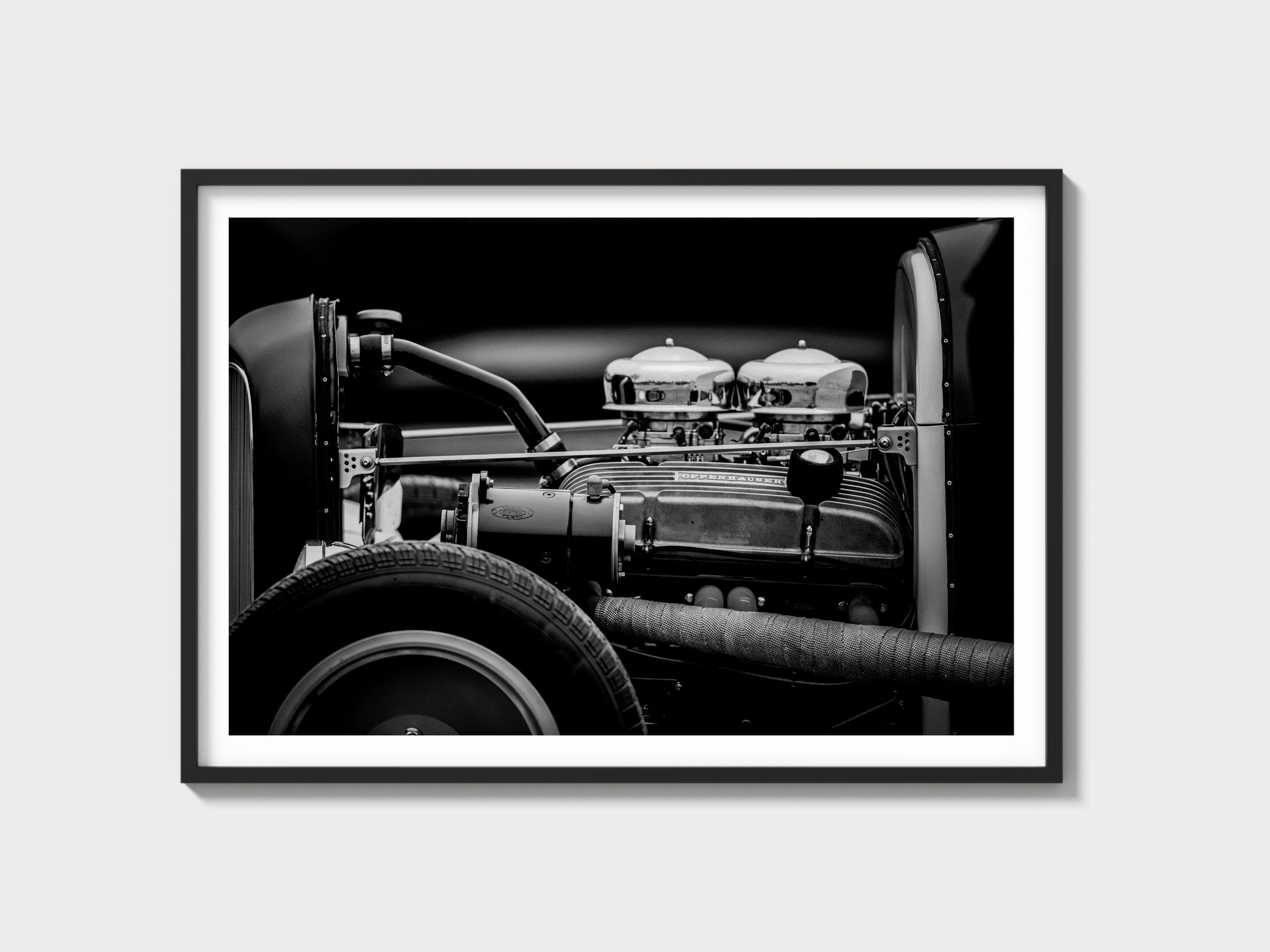
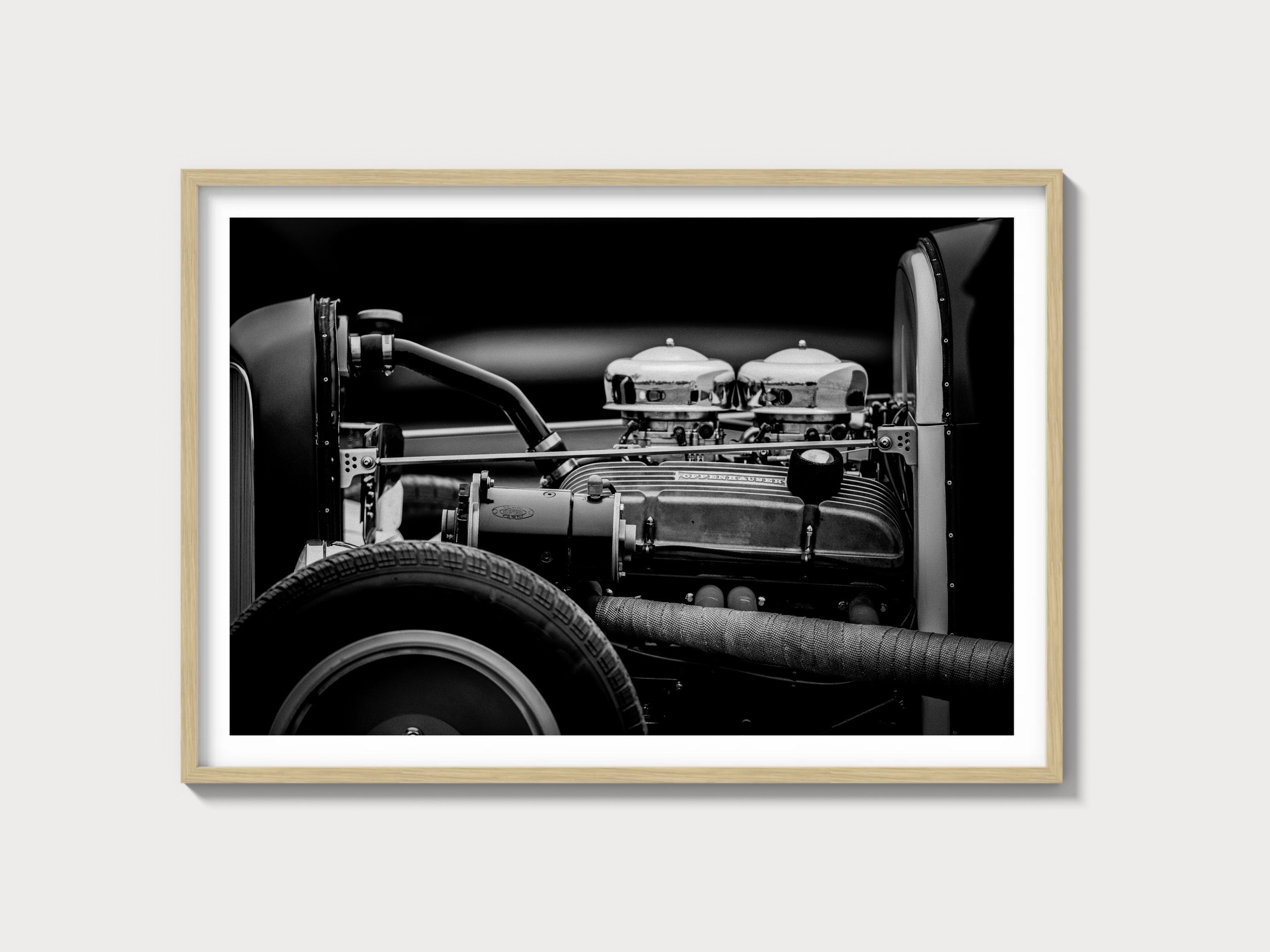
The Series 65 used Cadillac's 346-cubic-inch V-8, an engine closely associated with the division's late-1930s and 1940s reputation for durable, flexible power. Its 90-degree architecture, side valves, cast-iron construction, and long 4.50-inch stroke favored torque at modest crankshaft speed. Factory output was 135 bhp, a figure intended to describe usable power rather than a highly tuned peak.
The following specifications apply to the standard Series 65 powertrain. Carburetor tags, distributor numbers, and accessory details should be checked against the model year because service replacements accumulated over decades.
| Specification | 1937–1938 Series 65 |
|---|---|
| Engine configuration | 90-degree L-head V-8 |
| Construction | Cast-iron monobloc with side valves |
| Displacement | 346 cu in, approximately 5.7 liters |
| Bore | 3.50 in |
| Stroke | 4.50 in |
| Valvetrain | Side valves with hydraulic valve lifters |
| Induction | Naturally aspirated downdraft carburetion |
| Factory-rated output | 135 bhp |
| Ignition | Battery-and-coil ignition with distributor |
| Lubrication | Pressure lubrication |
| Cooling | Liquid cooling with belt-driven fan |
| Clutch | Single dry-plate clutch |
| Transmission | Three-speed synchromesh manual |
| Final drive | Enclosed propeller shaft to live rear axle |
Cadillac's hydraulic lifters are an important restoration point. A properly rebuilt system helps the V-8 idle with the muted mechanical signature expected of the marque, while dirty oil passages, worn lifter components, or incorrect adjustment elsewhere in the system can produce persistent noise. Oil pressure, hot-idle behavior, and evidence of internal corrosion deserve more attention than fresh exterior paint on the engine.
The three-speed gearbox was designed to exploit the engine's low-speed pull. Synchromesh eases changes between the principal forward ratios, but first gear remains most useful for starting, grades, and maneuvering. Worn synchronizers, selector components, mounts, or clutch linkage can make an otherwise sound drivetrain feel considerably older than it should.
Chassis, Suspension, Steering, and Brakes
The Series 65 retained separate body-and-frame construction. Independent front suspension used coil springs, while a live rear axle rode on semi-elliptic leaf springs. This arrangement isolated the front wheels more effectively than a beam axle and allowed Cadillac to tune the car for a softer ride without sacrificing directional stability.
The concise chassis table highlights the dimensions and equipment most useful when distinguishing the two model years and assessing an incomplete restoration.
| Specification | 1937 | 1938 |
|---|---|---|
| Wheelbase | 131 in | 132 in |
| Construction | Fisher steel body on separate frame | Fisher steel body on separate frame |
| Front suspension | Independent, coil springs | Independent, coil springs |
| Rear suspension | Live axle, semi-elliptic leaf springs | Live axle, semi-elliptic leaf springs |
| Brakes | Four-wheel hydraulic drums | Four-wheel hydraulic drums |
| Wheels | 16-inch steel wheels | 16-inch steel wheels |
| Electrical system | 6-volt | 6-volt |
The one-inch wheelbase change is not permission to interchange chassis or sheet-metal parts casually. Mounting points, front-end components, trim, and body hardware must be checked against factory parts literature. Many surviving cars have acquired later engines, replacement wheels, sealed-beam headlamp conversions, improvised electrical equipment, or non-original hydraulic fittings.
Four-wheel hydraulic drums were appropriate for the period and provide acceptable braking when cylinders, hoses, shoes, drums, and linkage are correctly restored. A long or inconsistent pedal usually indicates a fault, not an unavoidable trait. Out-of-round drums, contaminated linings, incorrect shoe arc, and aged flex hoses can cause pulling or weak initial response.
Driving Experience and Road Manners
A healthy Series 65 moves away with little need for engine speed. The long-stroke V-8 supplies its useful thrust early, and the sensible method is to select the next gear before noise suggests urgency. Throttle response is measured rather than sharp, with the carburetor and heavy rotating assembly smoothing each input.
Steering effort is substantial at parking speed because there is no power assistance and considerable mass rests over the front wheels. Once moving, effort falls and the long wheelbase helps the Cadillac track steadily. Steering-box wear, incorrect toe settings, hardened tires, or neglected kingpins can introduce wander that should not be mistaken for authentic pre-war behavior.
The independent front suspension absorbs broken pavement more cleanly than the beam-axle layouts still found on some older luxury cars. Body roll develops progressively, and rapid direction changes remind the driver of the high roof, generous ground clearance, and narrow tires. The chassis works best with deliberate inputs and enough road space to let the springs settle.
The gearbox rewards an unhurried hand. A pause through neutral gives the synchronizers time to work, while the V-8's flexibility reduces the need for frequent shifting. Properly adjusted drums offer a firm, progressive pedal, but stopping distances and fade resistance cannot match a later hydraulic-disc system, so speed must be planned well ahead.
Identification and Originality
A 1937 or 1938 Cadillac should not be judged by modern 17-character VIN conventions. Period identification relies on the car's serial or engine-number evidence, Fisher Body plate, year-specific body style, and surviving factory records. A clean title carrying a number that cannot be reconciled with the car deserves investigation before money changes hands.
Fisher Body Data
The Fisher Body plate is central to identification. It normally records style, body, trim, and paint information, but decoding should use Cadillac and Fisher literature specific to the model year. Restamped plates, newly made tags, disturbed rivets, or numbers that conflict with the body configuration can indicate a reconstructed identity or a plate transferred during restoration.
The style entry should correspond to the sedan body rather than a convertible sedan or another Cadillac series. Paint and trim codes should be researched from year-correct documentation, because a color offered in 1937 was not automatically available under the same code in 1938. Upholstery grain, seat construction, headlining, carpeting, and woodgrained interior metal are often more revealing than exterior paint.
Engine and Number Matching
“Matching numbers” has a different meaning here than it does on a later muscle car with widely published VIN derivatives stamped throughout the drivetrain. The strongest case combines the engine serial evidence, Fisher data, chassis details, title history, and an authentic build record. A correct-type 346 V-8 is valuable, but it should not automatically be described as original to the car without documentary support.
Cadillac used the 346 engine over many years, making later service engines and complete drivetrain swaps entirely plausible. Casting details, accessory mountings, carburetor and distributor identification, generator type, manifolds, and date evidence can help determine whether an assembly is consistent with the stated year. The gearbox and rear axle also warrant examination for substituted later parts.
Year-Specific Exterior Details
The 1937 and 1938 cars have distinct grilles, hood-side treatments, lighting arrangements, moldings, bumpers, hubcaps, and dashboard details. Restorations assembled from swap-meet parts sometimes mix both years. Photographs in factory sales literature and an original parts book are safer references than another restored car.
Original running boards, grille pieces, hood hardware, lamps, bumper components, handles, and dashboard fittings add considerable value because high-quality replacements are not universally available. Rechroming worn die-cast trim may expose pits or distortion that cannot be corrected economically. Small missing fittings can consume more time than rebuilding the engine.
Variant and Body-Style Breakdown
The Series 65 catalog was narrow. Both known body configurations used the same basic 346-cubic-inch V-8 powertrain, and there was no factory competition or homologation derivative.
| Variant / Code | Years | Engine / Output | Market | Key Difference |
|---|---|---|---|---|
| Series 65 five-passenger sedan | 1937–1938 | 346 cu in L-head V-8, 135 bhp | Primarily United States | Closed four-door Fisher body with fixed steel roof |
| Series 65 convertible sedan | 1937–1938 | 346 cu in L-head V-8, 135 bhp | Primarily United States | Four-door open body with folding top and additional structural requirements |
Published totals of 4,401 Series 65 cars for 1937 and 1,401 for 1938 describe series production rather than a reliably documented count for each body style. The convertible sedan is scarcer, but that scarcity should not blur the closed sedan's appeal as the body that best illustrates the Series 65's intended use.
Performance and Dimensional Specifications
Cadillac literature emphasized smoothness, flexibility, and chassis specification rather than acceleration testing. Consistent factory or period road-test figures for 0–60 mph, quarter-mile performance, and maximum speed are not sufficiently uniform to present as definitive Series 65 sedan data. The documented figures below are more useful than modern estimates based on similarly engined cars.
| Specification | 1937 Sedan | 1938 Sedan |
|---|---|---|
| Wheelbase | 131 in | 132 in |
| Engine displacement | 346 cu in | 346 cu in |
| Factory-rated output | 135 bhp | 135 bhp |
| Forward speeds | Three | Three |
| Wheel diameter | 16 in | 16 in |
Body weight and final-drive ratios can differ with equipment and source, so they should be confirmed from a model-year specification sheet or the individual car. Rear-axle ratio has a noticeable effect on present-day drivability. A car with its original low gearing may feel busy at modern highway speed even when the engine, tires, and driveline are sound.
Compared With Related Cadillacs
Series 65 Versus Series 60
The Series 60 was shorter and served as Cadillac's lower-priced V-8 line. It used the same basic 346-cubic-inch engine architecture, which creates confusion when an engine or transmission has migrated between cars. The Series 65's longer wheelbase, larger Fisher body, body plate, and year-specific chassis details are the deciding evidence, not the presence of a 346 V-8 alone.
Series 65 Versus Series 75
The Series 75 was intended for more formal work and included longer, larger bodies suitable for seven-passenger and professional applications. Its greater dimensions and different body selections distinguish it from the five-passenger Series 65 sedan. Components may look similar in isolation, but major sheet metal, chassis parts, and trim should not be assumed to interchange.
Series 65 Versus the 1938 Sixty Special
The 1938 Sixty Special, designed under Bill Mitchell's direction while Harley Earl headed GM Styling, introduced a lower roof, integrated trunk, thinner pillars, and a body that deemphasized running boards. The Series 65 retained the taller, more traditional architecture of a separate-fendered Cadillac sedan. For collectors, this is not merely a trim distinction: the cars express two different approaches to luxury-car packaging in the same model year.
Series 65 Versus V-12 and V-16 Cadillacs
Cadillac's V-12 and V-16 models offered greater cylinder count, higher purchase price, and more complex restoration demands. The Series 65's V-8 is less exotic but benefits from broader mechanical familiarity and use across a larger portion of Cadillac production. The cost of trim, body repair, and woodgraining can still exceed expectations, even when the engine proves comparatively manageable.
Ownership and Restoration Notes
The 346 V-8 has good specialist recognition, but ownership should not be confused with maintaining a post-war overhead-valve Cadillac. Cooling passages can accumulate scale, blocks may crack after freezing, and neglected engines can suffer low oil pressure, bearing wear, sticky valves, or noisy hydraulic lifters. A rebuild requires a machine shop familiar with long-stroke flathead engines and period bearing practices.
Cooling-system condition is fundamental. The radiator core, water distribution, thermostat function, pump, hoses, fan, ignition timing, and fuel mixture all influence temperature. Installing a modern radiator core without cleaning the block may disguise rather than solve the underlying problem.
Fuel systems often contain sediment, deteriorated flexible lines, worn carburetor shafts, or incorrectly calibrated replacement carburetors. The original-style mechanical pump must be checked for leakage and compatibility with available gasoline. Any fuel reaching the crankcase can dilute the oil and damage bearings quickly.
The transmission is generally robust when lubricated and operated properly, but worn synchronizers, bearings, shafts, and selector parts require specialist attention. Clutch chatter may arise from contaminated facings, distorted components, poor linkage adjustment, soft mounts, or flywheel problems. Universal joints and the enclosed driveline should be inspected rather than dismissed as inaccessible.
Body, Frame, and Rust
Rust commonly attacks lower body areas where moisture and debris collect: rocker and sill structures, door bottoms, floor edges, running-board mounts, fender attachment points, rear body corners, trunk floor, and areas around the windshield and roof drainage paths. The frame should be examined around suspension mounts, crossmembers, body mounts, and any section hidden by accumulated undercoating.
Sedan door fit reveals a great deal. Uneven gaps may result from worn hinges, weakened body mounts, previous collision damage, or structural corrosion. A glossy repaint can conceal repairs made with excessive filler, especially along the lower doors and fender crowns.
Trim and Interior
Exterior trim often determines whether a project is financially rational. Grille castings, hood ornaments, lamps, handles, bumper hardware, hubcaps, dashboard pieces, and moldings can be more difficult to source than internal engine parts. Reproduction availability varies, and some replacement pieces require extensive fitting or finishing.
Interior restoration demands knowledge of pre-war Cadillac materials. Broadcloth, carpet binding, headlining, door furniture, instrument finishes, and woodgrained metal should follow original samples or authoritative documentation. Modern upholstery patterns, vinyl substitution, and generic woodgrain reduce authenticity even when the workmanship is competent.
The original 6-volt system works when battery capacity, cable gauge, grounds, starter, generator, regulator, and connections are correct. Slow cranking often results from undersized modern cables or poor grounds. A 12-volt conversion may improve convenience, but it alters the generator, gauges, bulbs, accessories, and appearance, and should be considered carefully on a high-originality car.
Buyer and Inspection Points
A serious inspection should begin with identity and completeness, then proceed to body structure and mechanical condition. Missing Series 65-specific trim can outweigh the apparent savings offered by a low-priced project.
| Area | What to Check | Why It Matters |
|---|---|---|
| Identity | Compare title, serial or engine-number evidence, Fisher Body plate, body style, and historical paperwork. | Discrepancies can complicate registration and undermine claims of originality. |
| Fisher Body plate | Inspect style, body, trim, and paint entries, plus rivets and surrounding metal. | A disturbed or incompatible plate may indicate an identity transfer or reconstructed body. |
| Engine | Check cold start, hot oil pressure, exhaust smoke, coolant contamination, lifter noise, and serial evidence. | A complete 346 rebuild is a major undertaking, and a correct-type engine is not necessarily original. |
| Cooling system | Inspect radiator, pump, hoses, block condition, temperature behavior, and signs of scale or leakage. | Overheating can signal restricted block passages or more serious internal damage. |
| Transmission and clutch | Test synchronizers, gear engagement, clutch take-up, mounts, and driveline vibration. | Specialist gearbox parts and correct driveline repairs are not casual service jobs. |
| Frame and body mounts | Look for corrosion, cracks, plated repairs, distorted crossmembers, and collapsed mounts. | Structural movement affects door fit, steering geometry, and body alignment. |
| Lower body | Probe sills, floors, door bottoms, trunk floor, running-board mounts, and fender joints. | Complex corrosion repairs require extensive disassembly and careful panel shaping. |
| Front suspension and steering | Check kingpins, bushings, wheel bearings, steering-box play, alignment, and tire age. | Accumulated wear produces wander and heavy, imprecise control. |
| Hydraulic brakes | Inspect cylinders, hoses, lines, drum condition, shoe contamination, and pedal consistency. | A car that pulls or has a long pedal is unsafe and may need a complete hydraulic overhaul. |
| Trim completeness | Inventory grille pieces, lamps, handles, hood fittings, hubcaps, bumpers, dashboard parts, and moldings. | Scarce die-cast and year-specific pieces can delay a restoration for years. |
| Electrical system | Confirm 6-volt equipment, cable gauge, wiring condition, charging output, gauges, and modifications. | Improvised conversions can damage instruments and create fire risks. |
| Documentation | Seek build information, ownership history, restoration invoices, photographs, and parts receipts. | Records distinguish a documented car from one assembled around an attractive body and loose components. |
Inspect the car from cold and allow enough time for it to reach full operating temperature. A short drive around a dealer's lot will not reveal hot oil pressure, cooling capacity, clutch behavior, brake pull, or driveline vibration. If the seller will not permit a careful examination by a pre-war Cadillac specialist, the uncertainty must be treated as a material defect.
Collector and Market Relevance
Series 65 sedans attract collectors who want a recognized Full Classic-era Cadillac experience without the scale and engine complexity of the division's V-12 and V-16 flagships. Interest concentrates on complete, correctly identified cars with credible histories, sound bodies, restrained color schemes, and interiors restored in the proper materials.
The 1938 model's lower published production gives it numerical scarcity, while the 1937 car represents the Series 65's first year. Condition and authenticity usually matter more than choosing between those dates. A largely complete sedan with aged paint and an intact original interior may offer a better restoration basis than a cosmetically bright car assembled with incorrect trim and a later drivetrain.
Convertible sedans command attention because fewer survive, but their structural and top-restoration demands are greater. The closed sedan remains the clearest expression of the model's purpose: a quiet five-passenger Cadillac designed for long-distance private use rather than chauffeur-driven seven-passenger service.
Auction descriptions sometimes lean heavily on the phrase “C-body” or on the presence of a 346 V-8. Neither proves that the body, chassis, and engine began life together. Buyers should place greater weight on Fisher data, serial evidence, year-specific fittings, factory documentation, and the quality of concealed restoration work.
Cultural and Automotive Relevance
The Series 65 had no meaningful factory racing history, and claims of a motorsport legacy would misrepresent its purpose. Its historical role lies in the transition from upright, separate-fender luxury cars to the lower and more integrated sedans that appeared immediately before the Second World War. Placed beside a 1938 Sixty Special, it makes that change visible without requiring an engineering diagram.
Cadillac-LaSalle club activity and broader pre-war touring culture have helped preserve the model. The 346 V-8's use in several Cadillac series also created a body of mechanical knowledge among specialists, although sedan-specific trim and Fisher-body details remain much less plentiful than general engine service parts.
These cars are most convincing in motion on secondary roads, where their gearing, hydraulic drums, tall seating position, and flexible engine can be used as intended. Modernized street-rod conversions exist, but removing the original frame, flathead V-8, dashboard, suspension, or hydraulic-brake architecture also removes much of what distinguishes a Series 65 from a generic late-1930s custom.
1937–1938 Cadillac Series 65 FAQ
What engine is in the 1937 and 1938 Cadillac Series 65?
Both model years used Cadillac's naturally aspirated 346-cubic-inch, approximately 5.7-liter, L-head V-8. Factory output was rated at 135 bhp, and power passed through a three-speed manual transmission to the rear wheels.
How can I distinguish a 1937 Series 65 from a 1938 model?
The years differ in wheelbase, frontal styling, grille, hood treatment, lamps, trim, and interior details. The 1937 wheelbase is commonly specified at 131 inches and the 1938 at 132 inches. Confirm the year through Fisher Body data, serial or engine-number evidence, factory literature, and the complete body configuration rather than a single trim component.
Is the Cadillac Series 65 the same as a Series 60?
No. They share the 346-cubic-inch V-8 architecture, but the Series 65 used a longer chassis and larger Fisher body. A transplanted Series 60 engine does not turn a Series 60 into a Series 65, nor does a 346 V-8 by itself authenticate the model.
How many 1937 and 1938 Series 65 Cadillacs were built?
Commonly published totals list 4,401 Series 65 cars for 1937 and 1,401 for 1938. Those numbers cover the series, including more than one body style, and should not be presented as sedan-only production without supporting factory documentation.
What are the principal mechanical problems?
Important concerns include cooling-system scale, block cracking from freeze damage, low hot oil pressure, bearing wear, noisy hydraulic lifters, fuel-system contamination, worn gearbox synchronizers, deteriorated engine mounts, steering play, and neglected hydraulic brakes. Age-related wiring and poor 12-volt conversions are also common.
Are parts available for a Series 65 restoration?
Routine engine, ignition, brake, and service items benefit from specialist support for the widely used 346 V-8. Series 65 body trim, grille castings, lamps, dashboard pieces, hood hardware, and correct interior fittings are much harder to replace. Completeness should therefore influence any purchase decision.
What makes a Series 65 sedan collectible?
Its two-year production run, monobloc 346 V-8, long-wheelbase Fisher sedan body, and place immediately before Cadillac's lower Sixty Special design give it clear historical value. Collectors favor documented cars that retain their correct drivetrain type, year-specific trim, original body identity, and period-appropriate interior finishes.
Collector Takeaway
The Series 65 deserves attention not because it was Cadillac's fastest or most expensive pre-war offering, but because it records a precise stage in the company's technical development. Its 346-cubic-inch monobloc V-8 was modern in manufacture, its independent front suspension and hydraulic brakes were suited to serious road use, and its tall Fisher sedan body still followed the formal proportions that the 1938 Sixty Special was about to challenge.
Buy the most complete and best-documented example available. The engine can be rebuilt, the brakes can be renewed, and worn suspension can be corrected, but missing grille castings, mixed-year trim, an unverifiable identity, or extensive concealed body corrosion can dominate the entire project. A sound Series 65 sedan preserves the moment when Cadillac's dependable V-8 became the core of the range, just before body design changed the visual language of the American luxury car.