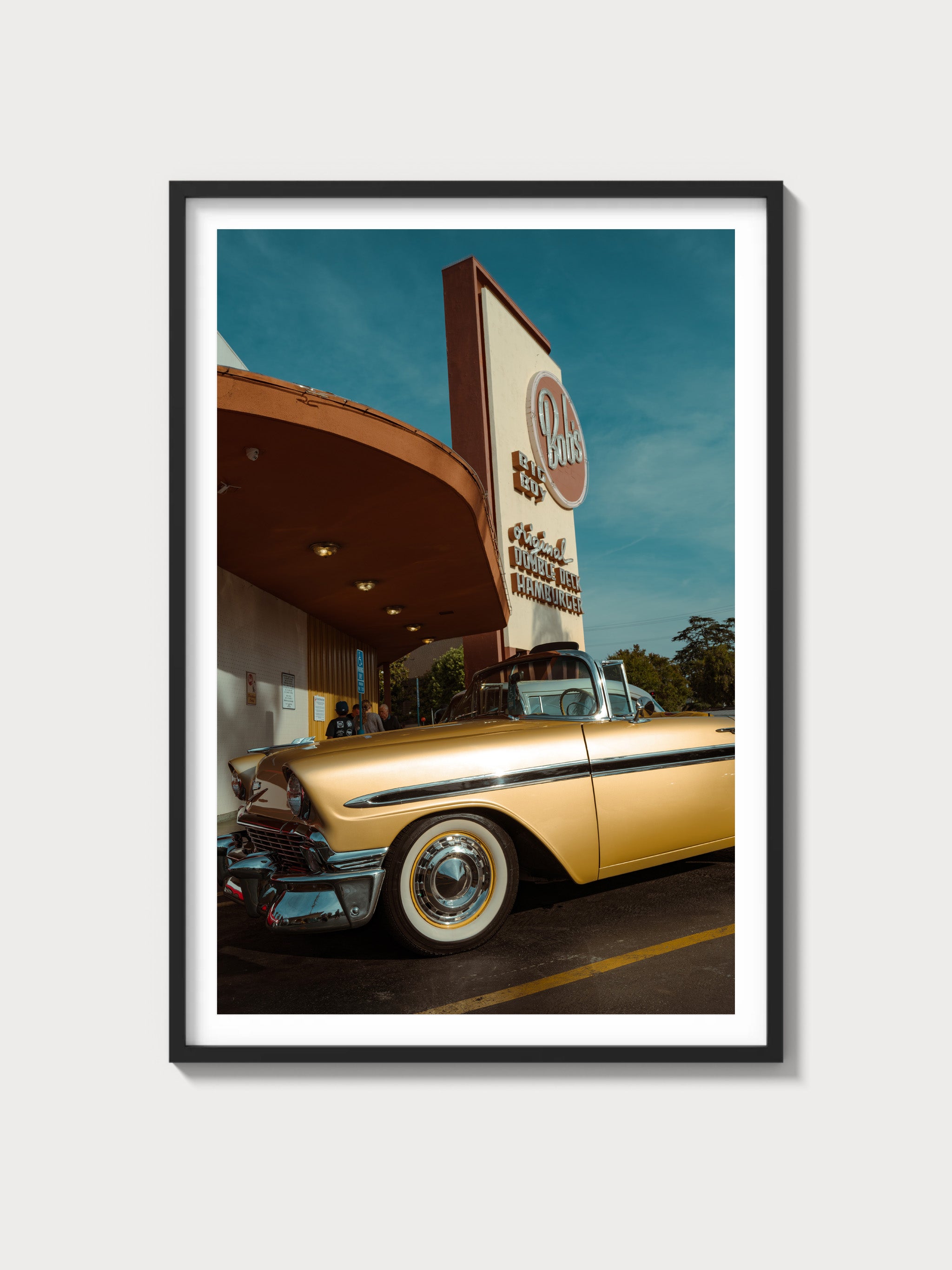
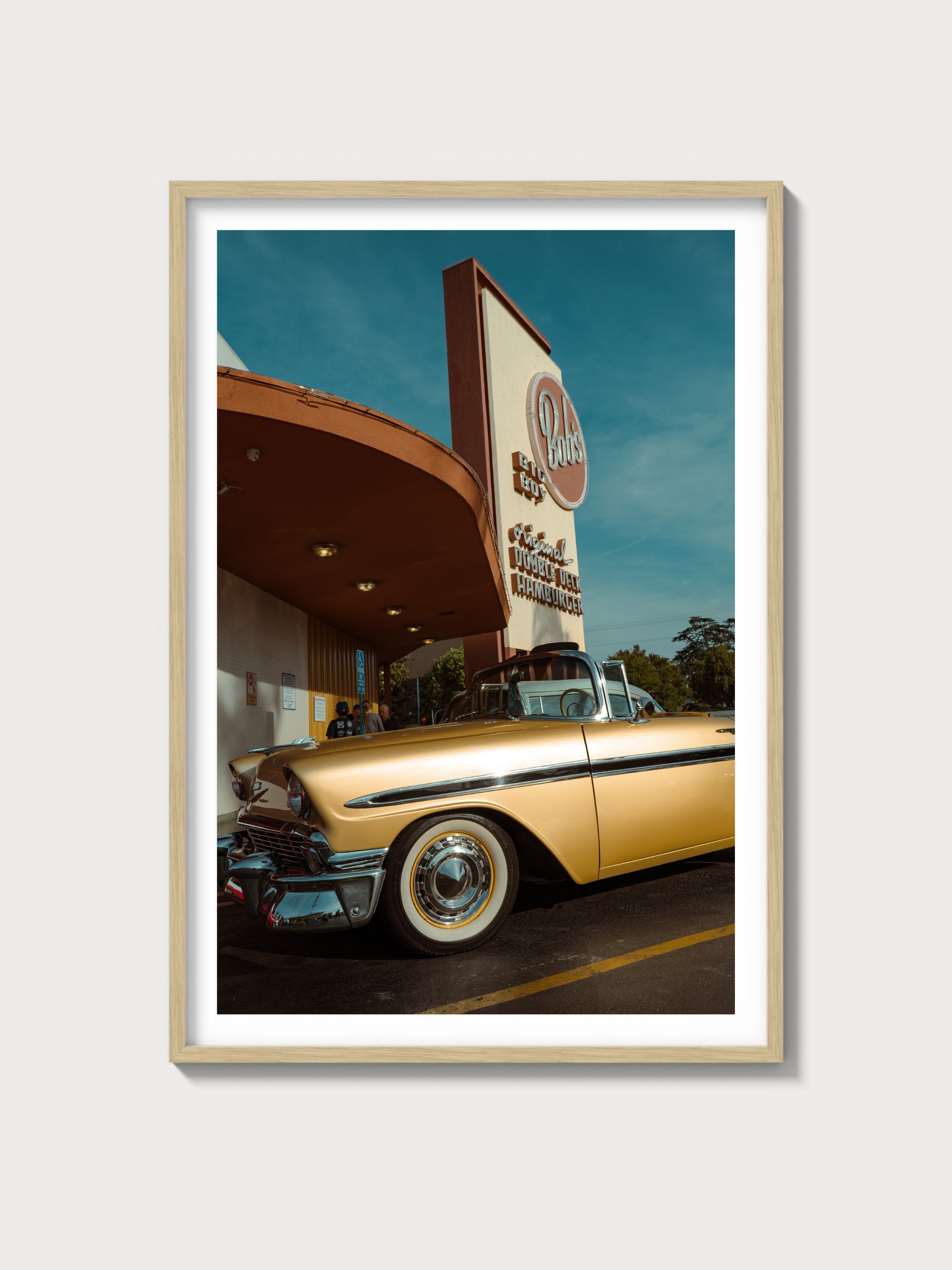
1958–1961 Chevrolet Nomad (2nd Gen) Full‑Size Wagon
Historical Context and Development Background
The Nomad name means different things depending on the year. After the celebrated 1955–1957 two‑door Tri‑Five sport wagon, Chevrolet repositioned Nomad for 1958 as the premium four‑door full‑size wagon. It rode on Chevrolet’s new cruciform “X‑frame” full‑size chassis introduced for 1958, featuring coil springs at all four corners and markedly different proportions: lower, longer, and wider than the outgoing cars. The 1958 model year was a one‑year body with a 117.5‑inch wheelbase; 1959–1961 moved to a more expansive 119‑inch wheelbase with the dramatic wide‑track stance and the famed 1959 “cat’s‑eye”/batwing tail treatment, toned down for 1960 and cleaned up entirely for 1961.
From a corporate standpoint, Chevrolet’s wagon hierarchy placed Nomad at or near the top of the range, above the entry Brookwood and, in most years, the mid‑level Parkwood. The lineup did evolve: for 1959–1960, the top nine‑passenger premium wagon used the Kingswood badge while Nomad typically denoted the premium six‑passenger four‑door. For 1961, Nomad served as the premium wagon line again, offered in both six‑ and nine‑passenger forms depending on market.
Powertrains mirrored Chevrolet’s full‑size portfolio. The stalwart 235 cu in “Blue Flame” inline‑six remained the base engine, the 283 cu in small‑block V8 covered the heart of the market (in two‑ and four‑barrel form, plus limited‑availability Rochester Ramjet fuel injection early on), and the new W‑series 348 cu in big‑block—originally conceived for truck duty—provided the torque and theater to move a fully laden wagon with authority. Transmissions spanned the column‑shift three‑speed (with optional overdrive), the ubiquitous two‑speed Powerglide automatic, Chevrolet’s unusual Turboglide variable‑ratio automatic, and, increasingly from 1959 onward, a floor‑shifted Borg‑Warner four‑speed in performance‑leaning builds.
While wagons weren’t built for victory circles, the engineering and engines were. Full‑size Chevrolets with 348 power made their mark in stock car racing, and that performance halo trickled back to the Nomad buyer who ticked the right boxes. In the showroom, key rivals included Ford’s Country Sedan/Country Squire, Plymouth’s Suburban series, and Dodge’s Sierra—each offering multiple seating configurations and a similar ladder from thrifty to lavish.
Engine and Technical Specifications
Below are representative factory specifications for the engines offered across the 1958–1961 Nomad range. Availability, ratings, and calibrations varied by model year and market, but the core hardware is consistent with Chevrolet’s full‑size line.
| Engine | Configuration | Displacement | Horsepower (gross) | Induction | Redline (approx.) | Fuel System | Compression Ratio | Bore x Stroke |
|---|---|---|---|---|---|---|---|---|
| 235 Blue Flame I6 | OHV inline‑six, iron block/head | 235 cu in (3.9 L) | 135–145 hp (year/market dependent) | Natural aspiration | ~4,500 rpm | 1‑bbl carburetor | ~8.0:1–8.25:1 | 3.5625 in x 3.9375 in |
| 283 Turbo‑Fire V8 (2‑bbl) | OHV V8, iron block/heads | 283 cu in (4.6 L) | ~185 hp | Natural aspiration | ~5,000 rpm | 2‑bbl carburetor (Rochester 2GC) | ~8.5:1 | 3.875 in x 3.00 in |
| 283 Turbo‑Fire V8 (4‑bbl) | OHV V8, iron block/heads | 283 cu in (4.6 L) | ~220–230 hp | Natural aspiration | ~5,200 rpm | 4‑bbl carburetor | ~9.5:1 | 3.875 in x 3.00 in |
| 283 Ramjet V8 (limited) | OHV V8 with mechanical fuel injection | 283 cu in (4.6 L) | Up to ~250 hp in full‑size applications | Natural aspiration | ~5,500 rpm | Rochester Ramjet mechanical FI | High‑compression calibration (varied) | 3.875 in x 3.00 in |
| 348 Turbo‑Thrust V8 (4‑bbl) | OHV W‑series V8, canted‑deck design | 348 cu in (5.7 L) | ~250–305 hp (by year/tune) | Natural aspiration | ~5,000 rpm | 4‑bbl carburetor | ~9.5:1 (varied by tune) | 4.125 in x 3.25 in |
| 348 Super Turbo‑Thrust (Tri‑Power) | OHV W‑series V8, triple 2‑bbl | 348 cu in (5.7 L) | ~280–315 hp (period ratings) | Triple 2‑bbl (Tri‑Power) | ~5,200 rpm | Three Rochester 2G carburetors | Performance calibrations varied | 4.125 in x 3.25 in |
Driving Experience and Handling Dynamics
Second‑generation Nomads deliver the characteristic full‑size Chevrolet balance between isolation and approachability. The X‑frame and full coil‑spring suspension produce a supple ride at family‑car speeds, particularly on period‑correct 14‑inch tires. Up front you get unequal‑length A‑arms with coils and an anti‑roll bar; out back, a live axle located by trailing arms with coil springs. Compared to leaf‑spring wagons of the earlier era, the rear of a 1958–1961 Nomad is notably settled over broken surfaces.
Steering is recirculating‑ball—light and slow on center, with generous self‑centering; power assist was optional and common. Brakes are finned drums on all four corners (power‑assisted on higher‑spec cars), adequate in everyday driving but prone to fade when worked hard on hills. The big W‑motor transforms the car’s personality: a 348 with Tri‑Power and a four‑speed provides real muscle and long‑legged highway pace, while the 283 four‑barrel gives a sweet spot of weight and responsiveness. Base six‑cylinder cars are serenely smooth if not hurried.
Gearboxes define the experience. Powerglide’s two ratios are relaxed and durable, suiting the 283 perfectly; the rare Turboglide slurs its way through with a variable‑statoreffect and demands diligent maintenance. The late‑addition four‑speed manual (widely available by 1959) sharpens the Nomad into a genuinely engaging cross‑country device when paired with deeper axle ratios and the hotter 348 tunes.
Full Performance Specifications
Representative period performance figures (actual results vary with axle ratio, transmission, body/load, and test conditions):
| Configuration | 0–60 mph | Quarter‑mile | Top speed | Curb weight | Layout | Brakes | Suspension | Gearbox |
|---|---|---|---|---|---|---|---|---|
| 235 I6, 3‑spd manual | ~15–17 s | ~19–21 s @ ~70 mph | ~85–90 mph | ~3,900–4,050 lb | Front‑engine, RWD | Drums (power optional) | IFS coils; live axle coils | 3‑spd column (OD optional) |
| 283 V8 (4‑bbl), Powerglide | ~10–12 s | ~17–18 s @ ~80 mph | ~100–105 mph | ~4,000–4,200 lb | Front‑engine, RWD | Drums (power optional) | IFS coils; live axle coils | 2‑spd Powerglide |
| 348 V8 (Tri‑Power), 4‑spd | ~8.5–9.5 s | ~16–17 s @ ~85–88 mph | ~110–115 mph | ~4,100–4,300 lb | Front‑engine, RWD | Drums (power optional) | IFS coils; live axle coils | 4‑spd manual (floor shift) |
Variants and Year‑to‑Year Breakdown
The Nomad badge indicated the premium full‑size wagon specification within Chevrolet’s lineup. Naming and seating configurations shifted through the cycle, summarized here:
| Model Year | Trim/Seating | Key Differences | Badging/Interior | Representative Engines | Production (published) |
|---|---|---|---|---|---|
| 1958 (117.5 in WB) | Nomad 6‑pass & 9‑pass | One‑year body; debut of X‑frame and full coils | Nomad scripts; premium trim and upholstery | 235 I6; 283 V8 (2‑/4‑bbl, limited FI); 348 V8 | Not separately published by trim |
| 1959 (119 in WB) | Nomad (premium 6‑pass); Kingswood (premium 9‑pass) | All‑new wide‑track body; distinctive cat’s‑eye tail lamps | Brightwork upgrades; premium interior patterns | 235 I6; 283 V8; 348 V8 (multiple tunes) | Not separately published by trim |
| 1960 (119 in WB) | Nomad (premium 6‑pass); Kingswood (premium 9‑pass) | Styling softened; revised interior details | Nomad badging; upgraded fabrics | 235 I6; 283 V8; 348 V8 | Not separately published by trim |
| 1961 (119 in WB) | Nomad 6‑pass & 9‑pass (premium line) | All‑new body; cleaner tail; new dash design | Nomad scripts; top‑line wagon trim | 235 I6; 283 V8; 348 V8 (performance calibrations) | Not separately published by trim |
Note: Chevrolet’s public reports did not consistently isolate Nomad‑specific production by seating configuration. Surviving dealer data and registration tallies indicate the premium Nomad share was substantially smaller than the combined Brookwood/Parkwood/Kingswood totals.
Ownership Notes: What Enthusiasts Should Know
- Rust and structure: Inspect X‑frame kick‑ups, body mounts, cowl, rear wheel arches, tailgate lower seam, spare‑well, and cargo‑floor braces. Drainage in the tailgate/glass channel can clog and trap moisture.
- Trim and glass: Wagon‑specific rear glass, tailgate hardware, and interior panels are harder to source than mechanical parts. Reproduction support is good for weatherstrips, emblems, and much of the brightwork; exact NOS wagon pieces can take patience.
- Powertrain: The 235 is durable and smooth with regular oil changes and valve/ignition service. The 283 is nearly bombproof with excellent parts availability. The 348 rewards careful tuning (carb synchronization on Tri‑Power, valve lash on solid‑lifter specs) and premium cooling system health.
- Transmissions: Powerglide is robust and well‑supported. Turboglide requires correct fluid, band, and stator maintenance; many cars have been converted to Powerglide or modern automatics. Four‑speed conversions are common; verify pedal box, shifter hump, and rear axle ratios against documentation.
- Service cadence (period‑typical): Engine oil ~3,000 mi, chassis lube/kingpins not applicable (ball‑joint front end), drum brake adjustment and shoe inspection at regular intervals, ignition points/plugs roughly every 10–12k miles, cooling system flush biannually. Follow the factory shop manual for exact procedures and settings.
- Suspension/brakes: Quality bonded shoes and fresh drums (or finned upgrades) reduce fade. Modern radial tires improve tracking but reveal worn bushings—refresh control arm bushings, ball joints, and idler arm to restore factory road manners.
Cultural Relevance and Collectibility
The 1958–1961 Nomad occupies a distinct niche: it pairs Chevrolet’s late‑fifties/early‑sixties styling drama with the practicality and rarity of a premium wagon. While the 1955–1957 two‑door Nomad dominates pop culture, the second‑generation four‑door models are increasingly appreciated for their authenticity as family road‑trip machines and their connection to Chevrolet’s burgeoning big‑block era. Auction catalogs have recorded strong results for documented 348 Tri‑Power/four‑speed cars and exceptionally restored 1961 examples, while solid 283 Powerglide drivers remain attainable relative to the two‑door Tri‑Five icon.
Wagons also resonate with period motorsport imagery: though they didn’t grid up in NASCAR, the same 348 that powered stock‑car Chevrolets could be ordered in a Nomad, and many wagons served as tow and support vehicles for grassroots racers—part of the fabric of the era.
FAQs
Was the 1958–1961 Nomad a two‑door like the Tri‑Five?
No. All 1958–1961 Nomads were four‑door full‑size wagons. Two‑door configurations in this period were limited to lower‑trim wagons in select years (e.g., Brookwood), not the Nomad.
Which engines were available in the 2nd‑gen Nomad?
The base 235 inline‑six, the 283 small‑block V8 (two‑barrel and four‑barrel; limited early fuel‑injection availability), and the 348 W‑series big‑block in multiple carburetion and cam calibrations. Exact ratings varied by year and market.
Did Chevrolet offer the 409 in 1961 wagons?
The high‑performance 409 debuted late in the 1961 model year in limited applications; wagons were not cataloged with the 409 for 1961.
How do I identify a genuine Nomad versus Brookwood/Parkwood/Kingswood?
Look for Nomad scripts and premium‑line trim, interior fabrics unique to the top wagon, and confirm body‑style/trim codes on the cowl tag against factory references. Premium seating/cargo appointments and exterior brightwork differ from lower trims.
Known trouble spots?
X‑frame corrosion (especially at the kick‑ups and mounts), tailgate lower seam and glass channel rust, aging drum brake hydraulics, tired steering linkage, and deferred maintenance on Turboglide units. Tri‑Power cars need proper carb synchronization and fuel system cleanliness.
Value drivers?
Documented 348 cars (especially Tri‑Power), four‑speed transmissions from period availability, strong colors and original trim completeness, and well‑preserved cargo‑area hardware. Clean 1961 examples often command a premium thanks to the crisp body redesign.